Dingboche to Gorak Shep (18 December to 19 December 2017)
A simple set of stairs. Holding your breath for 5 seconds to pull the zip closed on your tent. Getting in to your sleeping bag at night. Forcing your sleeping bag into it’s casing.
All simple tasks. But as you start to climb above 4000m, they become more difficult.
They leave you breathless. Your legs feel heavy. Your hands are clumsy.
The sign on the lodge wall warns you about high altitude pulmonary oedema and high altitude cerebral oedema. It also reminds you that the oxygen level at 5000m is just over 50% of what it is at sea level.
It feels a bit dramatic. And for some of your team mates, the effects are minimal. A little bit breathless. Maybe a minor headache. For others though, it is more extreme. Blood noses that won’t clot. Severe headaches. Chest pain.
“It’s the altitude…” we’d say in jest. Humour is sometimes the best way to overcome difficulty. Until it is the altitude. And then we just support each other with kind words and whatever remedies are available.
Then the morning arrives. You awake early and start walking at 730am. On the path to Gorak Shep (lunch, dinner and bed for the night).
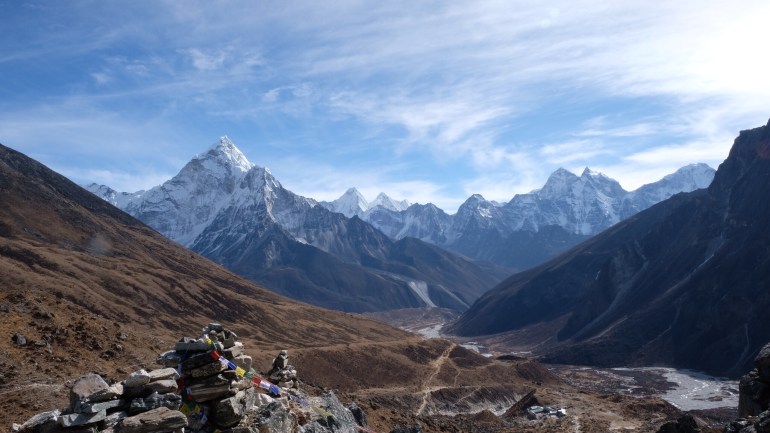
You continue to the lodge. It’s cold but the view more than makes up for it.
We arrive. We eat, find our rooms and lighten our packs. It’s a 2 hour walk from here to our ultimate destination: Everest Base Camp.
And then we walk again. Across a sandy square: a perfect location for a Star Wars sub-plot. And a good challenge later that afternoon when you return.
Sand, and then sand with rocks and then bare rock. Some up, some down. Walking along a glacier, watching an avalanche.
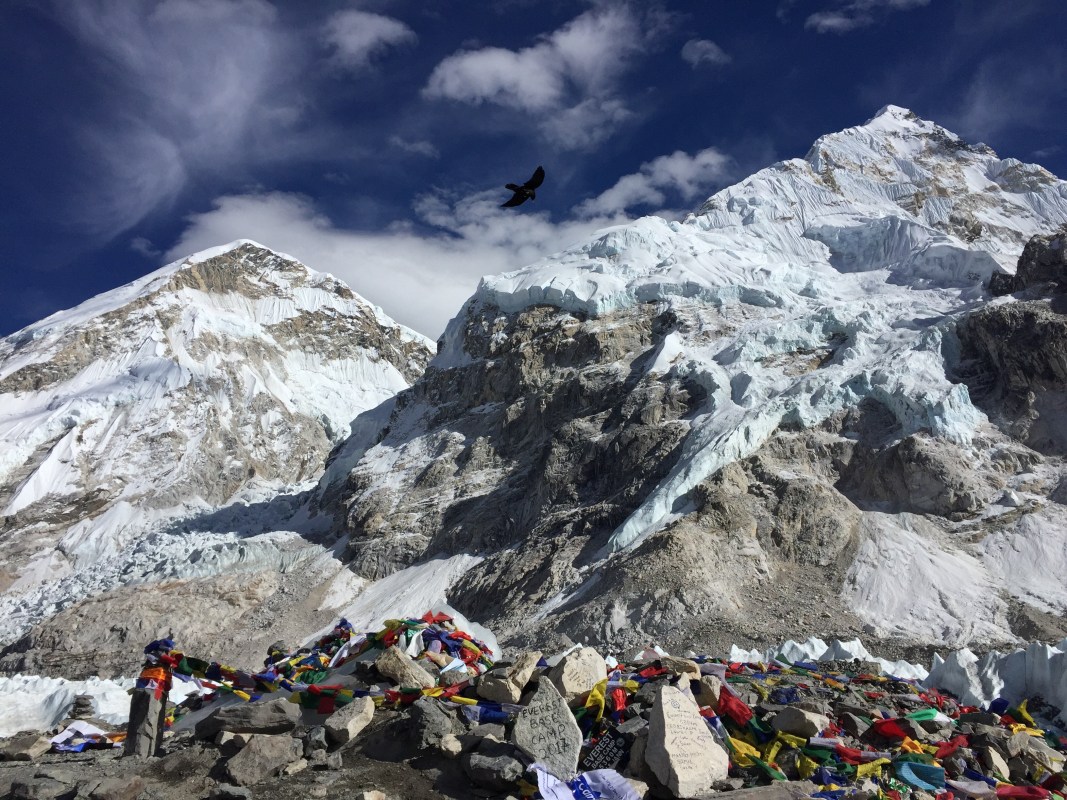
Two hours later and we’re there. What we’d set out to achieve, Base Camp.
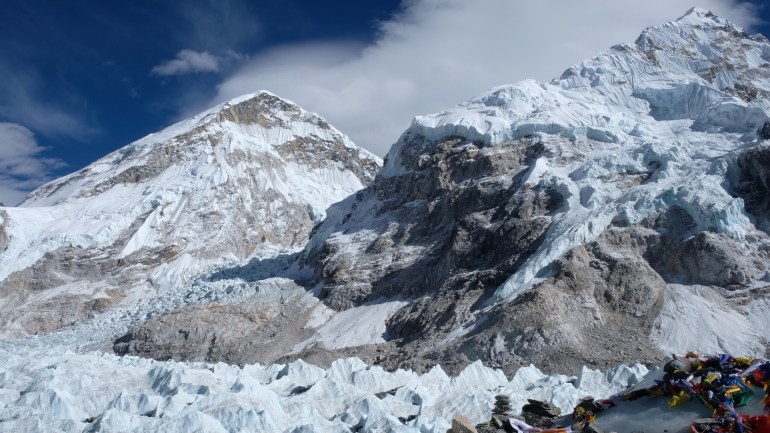
That feeling when you can’t stop smiling.
I think about the eight days leading up to this. The villages, the bridges, the yaks, our team, these grand mountains and their history, the breathlessness, the dust, the hills (both up and down).
I think briefly about the prior eight months. The Inca trail and Everest Base Camp in three months: what a way to turn around a disappointing year.
I remember all the people that donated to my charity page for Doctors Without Borders and how much their support motivated me. I wanted to enjoy the moment at Base Camp but I was also really excited to let them know that I had made it.
Then we hear the call to leave. At that point, we have to take the 2 hour walk back to Gorak Shep and our lodge. After eight and a half days walking, we had to turn around and walk back the exact way we came.
It’s at this point that I remember. Part of reaching Base Camp is about physical fitness and preparation. Part of it is the impact of altitude on your body (this differs dramatically from individual to individual).
And then there’s your mind.
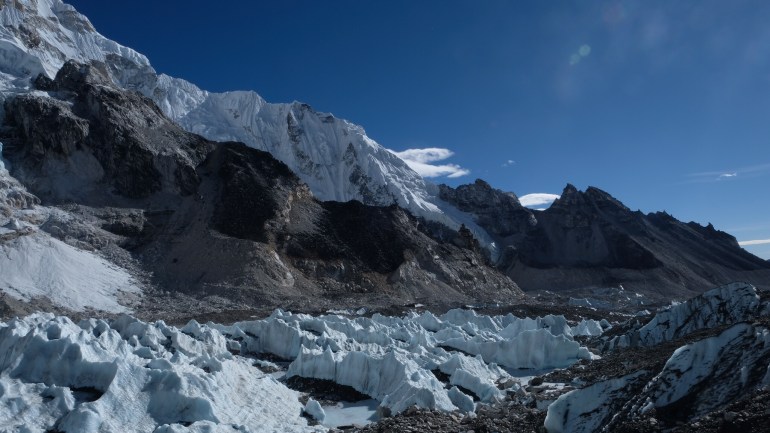
For me, this two hour walk back was the most challenging two hours of the entire 13 days. We had been up since 530am and on the trail since 730am. I’d had broken sleep the night before (the altitude and the nerves impacted sleep quality). And now, any of the downhill we’d done in the last 2 hours had just become an uphill challenge.
Ninety minutes in to the return trip, I stop at the top of a hill. Struggling to catch my breath.
I try to remain as still as I can, just for a few seconds. Being physically still is easy: you just stop moving. It’s not enough. I need to concentrate.
But being mentally still is much harder: so I focus on the grand mountains, the dramatic glacier and that special light.
15 seconds. 30 seconds. I don’t know how long I stood there but only when I focused on what was around me did my breath return. I felt relieved: I could breathe again. And then I was ready to face the last 30 minutes.
We celebrated with hot tea and a biscuit.
And in that quiet moment, these mountains and your mind come together again.
“I want to come back. When can I come back?”
Get Lost. Stay curious.
 The Chief Travel Officer